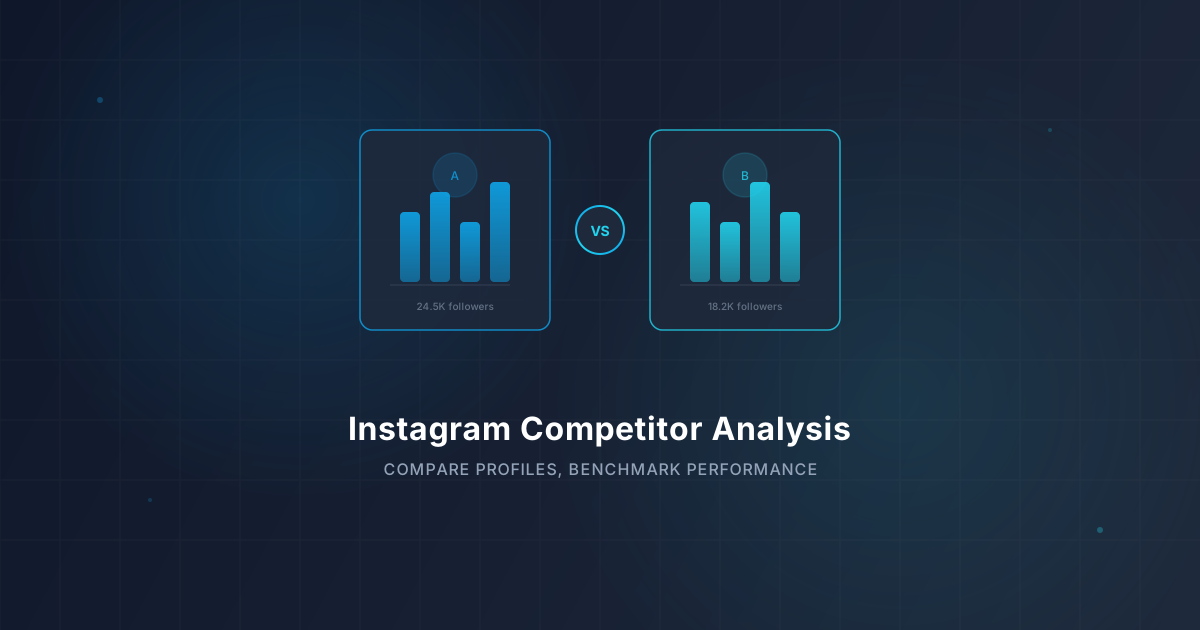
Instagram Competitor Analysis — How to Research & Benchmark Rivals in 2026
Master Instagram competitor analysis in 2026 with IGStoryPeek. Learn which metrics to compare, how to benchmark content strategies, and gain actionable insights.
Instagram Competitor Analysis — How to Research & Benchmark Rivals in 2026
Key Takeaways: Use IGStoryPeek’s Activity Analyzer to study competitor posting patterns, engagement trends, and content strategies. No login required — enter any public username and get actionable intelligence in seconds.
If you’re not studying your competitors on Instagram, you’re guessing. And in 2026, guessing is expensive.
Instagram competitor analysis isn’t about copying what others do. It’s about understanding the landscape so you can find gaps, spot trends early, and make smarter decisions about your own content.
Why Competitor Analysis on Instagram Matters in 2026
Instagram’s ecosystem has matured significantly. Organic reach is harder to earn, ad costs keep climbing, and audiences are more selective about who they follow. The accounts that grow consistently are the ones that understand their competitive environment.
What You Gain From Studying Competitors
Competitor analysis gives you three things no amount of creative brainstorming can replace:
- Proven content ideas — see what formats and topics already resonate with your shared audience
- Posting schedule intelligence — learn when your competitors post and when their audience is most active
- Engagement benchmarks — understand whether your metrics are strong or weak relative to similar accounts
- Audience overlap insights — identify followers who engage with competitors but haven’t discovered you yet
The Mistake Most Brands Make
Most people look at a competitor’s follower count, feel intimidated or relieved, and move on. That’s not analysis. Real competitor research requires examining behavior patterns over time, and the right tools make this practical rather than tedious.
The 6 Metrics That Actually Matter
Not every number on an Instagram profile is worth comparing. Focus on these six metrics when benchmarking competitors in 2026.
1. Engagement Rate Per Post
This is the single most important metric. Calculate it as (likes + comments) divided by follower count, expressed as a percentage. An account with 10,000 followers and 500 average likes per post (5% engagement) is outperforming one with 100,000 followers and 1,000 likes (1% engagement).
Use IGStoryPeek’s Activity Analyzer to quickly assess whether a competitor’s audience is genuinely engaged or artificially inflated.
2. Content Mix and Format Distribution
How much of a competitor’s content is Reels vs. carousels vs. single images vs. Stories? In 2026, Reels continue to dominate reach, but carousels often generate higher saves and shares. Understanding a competitor’s format breakdown reveals their strategy and where they see the most return.
3. Posting Frequency and Consistency
Some accounts post three times daily. Others post three times weekly. Neither approach is inherently better — what matters is consistency and whether the posting schedule aligns with audience activity windows.
The Activity Analyzer shows posting patterns over time, making it easy to spot how often competitors publish and whether they maintain a regular rhythm.
4. Story Activity and Ephemeral Content
Stories remain one of the most personal touchpoints on Instagram. Competitors who post Stories frequently tend to build stronger community connections. You can view competitor Stories anonymously using the IGStoryPeek Stories Viewer to study their approach without tipping them off.
5. Hashtag Strategy
Which hashtags do your competitors use, and how do they mix high-volume and niche tags? A competitor consistently appearing in niche hashtag feeds has likely done careful research. Use our Instagram tools to find relevant tags and compare them against competitor choices.
6. Like-to-Comment Ratio
Posts with lots of likes but almost no comments may indicate passive scrolling rather than genuine interest. A healthy ratio suggests the content sparks conversation. Check competitor like patterns quickly using IGStoryPeek’s Post Viewer.
How to Conduct a Full Competitor Analysis — Step by Step
Here’s a practical workflow you can follow in under an hour.
Step 1: Identify Your Top 5 Competitors
Start with direct competitors (businesses offering similar products or services) and indirect competitors (accounts targeting the same audience with different offerings). Don’t limit yourself to the obvious names — smaller accounts with high engagement often reveal the most useful strategies.
Step 2: Collect Baseline Data
For each competitor, record their current follower count, average likes per post, average comments per post, posting frequency, and primary content formats. IGStoryPeek lets you pull much of this data instantly without needing to log in.
Step 3: Analyze Content Themes
Scroll through the last 30 posts for each competitor. Group them by theme or topic. Which themes get the most engagement? Which ones fall flat? This reveals what your shared audience cares about.
Step 4: Study Their Stories Strategy
Use the Stories Viewer to watch competitor Stories without leaving a trace. Note how they use polls, questions, links, and call-to-action stickers. Stories are where brands often reveal their most authentic strategy.
Step 5: Build a Comparison Spreadsheet
Create a simple spreadsheet with competitors as columns and metrics as rows. Update it monthly. Over time, you’ll see trends that inform your strategy far more reliably than any single snapshot.
Benchmarking: Setting Realistic Performance Goals
Benchmarking against competitors only works if you compare accounts of similar size and maturity. A brand with 2,000 followers shouldn’t benchmark against one with 2 million — the dynamics are completely different.
Industry Averages in 2026
As a rough guide for 2026, engagement rates across Instagram average around 1.5-3% for accounts under 50,000 followers and drop to 0.5-1.5% for larger accounts. If your competitors exceed these ranges, they’re doing something right that deserves closer study.
Setting Your Own Benchmarks
Once you have three months of competitor data, calculate averages for each metric. Set your goals at the median of your competitor group initially. As you improve, aim for the top quartile. This approach grounds your expectations in reality rather than wishful thinking.
Common Competitor Analysis Mistakes to Avoid
Obsessing over follower count. Followers can be bought. Engagement can’t be faked as easily.
Analyzing only once. Competitor landscapes shift constantly. Monthly check-ins are the minimum.
Copying instead of learning. The goal is to understand what works and why, then adapt those principles to your own brand voice and audience.
Ignoring smaller competitors. Fast-growing small accounts often signal emerging trends before larger accounts catch on.
Frequently Asked Questions
How often should I analyze my Instagram competitors?
A thorough monthly analysis works well for most brands. However, you should do quick weekly check-ins on their posting frequency and any standout content. Use tools like IGStoryPeek to make these check-ins fast and efficient.
Can I analyze a competitor’s Instagram without them knowing?
Yes. When you use IGStoryPeek’s Stories Viewer or other analysis tools, the competitor account has no way of knowing you viewed their content. You can research freely without appearing in their viewer lists.
What’s a good engagement rate on Instagram in 2026?
For accounts under 50,000 followers, 2-4% is considered healthy. For accounts between 50,000 and 500,000, aim for 1-2.5%. Larger accounts typically see 0.5-1.5%. These ranges vary by industry — fashion and food tend to run higher, while B2B accounts trend lower.
How many competitors should I track?
Start with 3-5 direct competitors and 2-3 indirect competitors. Tracking too many dilutes your focus. If your industry is niche, even 3-4 total competitors may be enough to build meaningful benchmarks.
Is it worth paying for competitor analysis tools?
For most small and medium businesses, free tools provide more than enough data. IGStoryPeek offers comprehensive competitor research capabilities at no cost. Paid tools become worth considering only when you need automated reporting across dozens of competitors or deep historical data spanning years.
Sources
- Instagram for Business — Competitive Insights — Instagram Business Tools
- Instagram Creator Best Practices — Instagram for Creators
- About Instagram — Meta Technologies
You might also like
- Instagram Activity Analyzer — Uncover Posting Patterns & Peak Engagement Times in 2026
- Instagram Follower Analyzer — How to Track Growth & Spot Fake Followers in 2026
- Instagram Engagement Rate — How to Calculate It & What's a Good Rate in 2026
- Instagram Reels vs Stories in 2026 — Which Format Wins for Reach and Engagement?
- Instagram Story Highlights — The Complete Guide to Creating & Viewing in 2026
Share this article
Alex Morgan
Content strategist at IGStoryPeek. Specializing in Instagram analytics, engagement optimization, and content strategy.
Try IGStoryPeek →Related Posts
Instagram Activity Analyzer — Uncover Posting Patterns & Peak Engagement Times in 2026
Discover how to analyze Instagram posting patterns, find peak engagement times, and optimize your content strategy. Use IGStoryPeek's free activity analyzer for instant insights.
Instagram Follower Analyzer — How to Track Growth & Spot Fake Followers in 2026
Learn how to analyze Instagram followers, track growth trends, and detect fake or bot accounts. Use IGStoryPeek's free follower analyzer to get instant audience insights without logging in.
Instagram Engagement Rate — How to Calculate It & What's a Good Rate in 2026
Learn how to calculate your Instagram engagement rate in 2026 with exact formulas and niche benchmarks. Use IGStoryPeek's free tools to measure real performance.
Instagram Reels vs Stories in 2026 — Which Format Wins for Reach and Engagement?
Compare Instagram Reels vs Stories in 2026: reach, engagement, algorithm tips, and when to use each. Use IGStoryPeek to analyze performance and optimize your strategy.
Instagram Story Highlights — The Complete Guide to Creating & Viewing in 2026
Everything about Instagram Story Highlights in 2026. Learn how to create, organize, and design Highlights. Use IGStoryPeek to view anyone's Highlights easily.